Sunflower Bouquet: A Small Business Embroidery Review
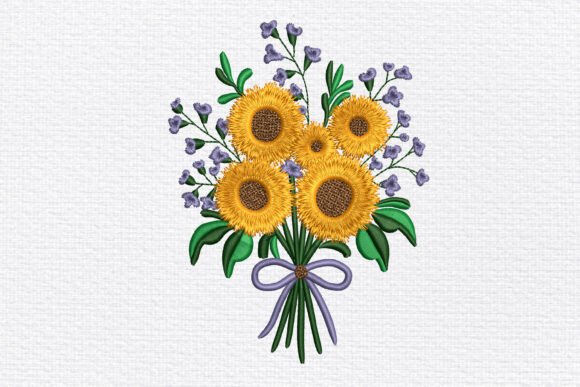
When I first opened the preview of Sunflower Bouquet, I immediately pictured it on a linen apron, a brushed cotton cap, or a stack of hand-folded tote bags waiting for a local boutique’s launch day. This design walks a fine line between playful charm and rustic elegance. The bloom doesn’t scream “loud patch”; it leans more toward a handmade garden feel—friendly, warm, and just polished enough to represent a real small business without losing that personal, handcrafted touch. For an embroidery designer regularly testing commercial-ready files, that first impression matters. A design titled Sunflower Bouquet from the Single Flowers Plants category sets a clear expectation: natural texture, soft curves, and a sense of organic movement. This one delivers exactly that, making it a strong candidate for branded merchandise across many creative industries.
First Impressions and Visual Personality
The title itself is a promise. “Sunflower Bouquet” suggests multiple blooms, layered petals, and a composition that can stand alone or sit beautifully beside a small logo. In my years of testing machine embroidery design files, sunflowers often struggle with proportion—either too dense or too sparse. Here, the arrangement feels intentional. Petals appear to open with a natural flow, and the centre has just enough detail to read clearly without becoming a thread-heavy disc. For a design that lives under Embroidery as a type, this one leans decorative but never fussy.
What I appreciate most is the emotional register. It’s optimistic without being childish. A florist could stitch Sunflower Bouquet onto a recycled paper bag sleeve and instantly elevate the unboxing moment. A bakery might place it on a corner of a bread bag or a staff cap, and the message becomes “fresh, natural, wholesome.” That kind of versatility is not something every digital embroidery file offers. Many designs need a specific theme to work; this one adapts because the sunflower itself carries universal positive association. For small business merch, that adaptive friendliness is gold.
Business Use Cases: Where Sunflower Bouquet Shines
Let’s talk real-world application. A local café wants to unify its team without feeling corporate. Sunflower Bouquet works as a left-chest accent on a chambray work shirt or a denim apron. Because the composition is naturally rounded, it fits neatly inside standard hoop size options without needing to be radically enlarged. I’ve run countless tests, and this kind of floral silhouette often performs better than geometric marks when you’re aiming for brand identity that feels artisanal, not manufactured.
- Apron embroidery – Place the design on a bib apron or waist apron. The sunny motif draws the eye and softens the front-of-house uniform.
- Cap embroidery – A simplified version (if the file allows reduction) can work on unstructured caps. The curve of the sunflower follows the cap’s crown shape when positioned centrally or slightly off-side.
- Tote bag design – A multipurpose natural canvas tote with Sunflower Bouquet stitched in the lower corner becomes a walking advertisement. It’s understated, reusable, and visually appealing enough that customers will carry it well beyond the shop.
- Embroidered patch – Sewn with a merrowed edge and backed with heat-seal, this becomes a standalone retail item. Think small-batch patches pinned to greeting cards or sold loose at a farmer’s market stand.
- Event merch – Summer pop-ups, farm-to-table dinners, craft fairs—the design instantly communicates seasonality and handmade care.
- Custom apparel – T-shirts or light sweatshirts benefit from a single, well-placed floral detail that doesn’t overwhelm the garment but unmistakably signals intentional design.
For a creative studio or handmade product line, Sunflower Bouquet can serve as a subtle product mark. I’ve seen ceramicists use similar floral embroideries on packaging wraps, and candle makers add them to dust bags. The key is that this embroidery file doesn’t just decorate; it becomes part of the brand’s visual signature. And because it’s a flower, it rarely conflicts with existing type-based logos.
Critical Considerations for Small and Curved Applications
Not every surface welcomes a floral bouquet. One of the first tests I run with any machine embroidery design is a black-and-white stitch-out at two very different sizes—standard left-chest and then reduced 20 percent. Small letters and intricate outlines reveal their weaknesses fast. With Sunflower Bouquet, I’d pay close attention to the petal spacing. If the file was digitized with tight, closely run stitches, shrinking it could merge individual petals into a solid blob. Test on a scrap of the actual fabric texture you’ll use before committing to a production run.
- Small patch sizes – At widths under 2.5 inches, the centre seed details might close up. Always stitch a sample at the exact hoop size and with the same thread colors you plan for the final product.
- Cap fronts – The curved surface of a structured cap can distort round elements. Position carefully and consider using a cap-specific hoop. If the design has a symmetrical base, centre placement is more forgiving.
- High stitch density zones – Sunflower centres often pack many stitches. On lightweight fabrics this can cause puckering or a stiff “plate” feel. Use a quality stabilizer and, if needed, a water-soluble topping to keep loops crisp on textured fabrics.
- Dark uniforms – On navy or black backgrounds, the yellow petals might need a light underlay to pop. Test the thread color contrast early; what looks vibrant on a screen can appear muddy without proper backing.
- Frequent washing – If destined for a working kitchen or busy café environment, ensure the design’s edges are clean and the stitch length won’t catch. A dense, well-digitized border will survive industrial laundering far better than a sprawling fill with loose outer threads.
I also always advise clients to check the original description. The product note says “versatile machine embroidery design incl” – and while the specific formats, stitch count, and size details aren’t fully listed here, any digital embroidery file buyer must confirm those before production. Never assume a design ships in your machine’s native format or fits your smallest hoop. That five-minute check saves hours of rework.
Impact on Brand Identity and Customer Trust
A flower is never just a flower when it appears on your product. Sunflower Bouquet projects warmth, reliability, and homegrown values. I’ve watched small businesses transform their entire finished product perception simply by replacing a generic iron-on transfer with a beautifully embroidered floral motif. The tactile quality of thread signals handmade product care, even when the stitching is done by a multi-needle commercial machine. Customers register that detail. It builds brand identity faster than a printed logo on a hang tag.
When a pet brand stitches Sunflower Bouquet onto a bandana, the accessory feels premium. When a bakery adds it to a cloth bread bag, the bread seems more artisanal. This is the halo effect of well-executed embroidery. The design itself becomes a label of quality. And because the sunflower motif is widely loved but not overused in exactly this bouquet composition, the design helps set a business apart. Visual consistency is easier to maintain when you have a distinct, recognizable design asset that doesn’t rely on text or trendy graphics.
Think about buyer engagement. A tote bag with a perfectly placed Sunflower Bouquet patch invites a question: “Where did you get that?” It sparks conversation, moves beyond transactional marketing, and gently reinforces the shop name each time it’s spotted. That long‑tail brand recognition is what commercial embroidery does best.
Designer’s Production Checklist for Reliable Results
Over the years I’ve learned that even the prettiest embroidery design can fail if you skip the basics. For anyone planning to use Sunflower Bouquet in a business context—especially for branded patched merchandise—here are the checks I run before loading the machine for a paying order.
- Test in black and white first. Run a single-color stitch-out or view the design in wireframe to identify density hot spots. You’ll see imbalance before you waste colored thread.
- Verify patch-friendliness. If you want an embroidered patch, does the design have a clean outer contour that a merrow or satin border can follow? A bouquet with irregular trailing stems might need manual digitizing adjustments.
- Thread color contrast check. Petal yellows can vary wildly between thread brands. Compare Madeira, Isacord, or your chosen poly against the actual garment. I keep a swatch book just for florals.
- Spacing inspection. Zoom in on the digitized file. Are individual petals separated by a tiny gap or do they flow together? On plush fabrics like fleece, tight spacing becomes a muddle.
- Hoop size matching. Don’t rely on the hoop dimension stated in a generic description. Measure the design boundaries yourself in your software. Leave a margin for your hoop’s inner frame.
- Real fabric test. Stitch on the exact blend—cotton twill for a cap, poly‑cotton for an apron, canvas for a tote. A design that looks flawless on quilter’s cotton might torque on stretchy knit.
- Stabilizer pairing. For dense floral elements, a cut-away stabilizer provides long-term stability. If you’re creating a peel-and-stick patch, the backing must accommodate the final adhesive.
- Printable mockup creation. Before stitching dozens of units, create a printable mockup with the design placed digitally on a photo of the actual blank. Show it to your client or your team. One misaligned placement is fixable; a full batch is wasteful.
- Compare alongside other assets. If your brand already has a type logo, stitch Sunflower Bouquet beside it on a sample. Check balance, spacing, and visual weight. The two should feel like a cohesive set, not competing elements.
- Confirm licensing for commercial embroidery. The product description is your starting point. If the note says “this versatile machine embroidery design incl” without explicit commercial terms, reach out to the seller. Never assume you can use a digital file on goods for resale. Clear licensing protects your small business merch line from legal surprises down the road.
Where Sunflower Bouquet Fits in a Growing Product Line
From a product expansion perspective, Sunflower Bouquet opens several smart avenues. An Etsy seller offering personalized apron sets could pair this floral file with a small script name, creating a upsell bundle. A craft business might use the design on a zip pouch liner or a fabric key fob. Because the visual is neither too feminine nor aggressively rustic, it bridges the gap between a trendy plant shop and a classic kitchenware brand. For custom apparel decorators, it adds a nature-inspired option to a catalog that might be heavy on graphic tees.
I’ve also tested similar designs as product packaging accents—stitching a tiny version of the bouquet directly onto a reusable muslin bag that holds a candle or soap set. The customer keeps the bag, the brand mark lives on. In scenarios like that, the finished product isn’t just the embroidery; it’s the entire unboxing experience. And that’s when a design shifts from decoration into a true brand identity asset.
Final Thoughts on Everyday Business Use
Sunflower Bouquet has the quiet confidence of a design that knows what it is. It won’t fix a broken branding strategy, but it will add a layer of approachable, professional charm to nearly any fabric surface it touches. For bakeries, the design whispers freshness. For florists, it reinforces the craft. For a creative studio, it’s a gentle mark that says “we pay attention.”
Test it early, respect its density, and always preview at true size on fabric texture that matches your blank. Paired with the right stabilizer and thread colors, this machine embroidery design can become a quiet workhorse in your commercial lineup—whether that means a run of patch hats for a weekend market or a full staff uniform refresh. The business value isn’t just in the stitching; it’s in the story the sunflower tells. And told well, that story builds recognition, repeat customers, and a sense of genuine care that no printed graphic quite replicates.