Wildflower Garden Embroidery Design Review
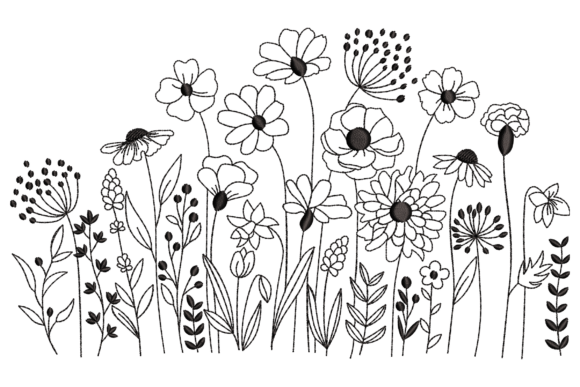
As an embroidery designer who has worked with dozens of boutique brands on limited sweatshirt drops, I’m always hunting for designs that balance visual impact with practical stitchability. When I opened the Wildflower Garden file for the first time, I immediately felt that blend of modern minimalism and artistic hand-drawn charm. The black and white floral line art style gives it a crisp, almost illustrative personality that can instantly elevate a basic sweatshirt into a premium boutique piece. The official description calls it “a field of diverse wildflowers and foliage rendered in a delicate line art style,” and that’s exactly what I saw on the screen—layered blooms, slender stems, and varied leaf shapes that create a hand-sketched garden.
The First Impression: Layout, Mood, and Stitching Personality
Right away, the composition pulled me in. The wildflowers aren’t stiff or overly symmetrical; they feel organic, as if someone quickly sketched a meadow with a fine liner pen. That looseness is a huge asset for apparel. It gives the Wildflower Garden a relaxed, slightly rustic feel—ideal for cozy autumn hoodies or a spring streetwear collection. The mood is both feminine and playful, but the black-and-white palette keeps it grounded enough to work on unisex pieces. Because the line art relies on single-direction strokes and varied spacing, the finished embroidered product will have a light, airy texture. It won’t look like a dense patch; instead, you’ll see the fabric peek through, which is exactly what you want for a soft, high-end sweatshirt.
What I appreciate most is the detail level. The varied blooms—including daisy-like flowers, clustered buds, and feathery foliage—are all woven into a cohesive embroidery composition without becoming cluttered. The design holds its own as a standalone focal point, but it’s also delicate enough to pair with small text or a subtle logo. For a boutique sweatshirt, that versatility is priceless.
Placing Wildflower Garden on a Premium Sweatshirt
Placement can make or break an embroidered sweatshirt design. For a typical chest logo spot, Wildflower Garden works beautifully when centered or slightly offset left. I’d recommend sizing it about 3.5 to 4.5 inches wide for a standard unisex crewneck, which gives the intricate line work room to breathe. On oversized hoodies, I’ve visualized it larger—maybe 6 inches wide on the back, or even wrapping subtly over the shoulder as a decorative accent. Sleeve placement is another winner. A smaller version, around 2 inches, running vertically along the forearm creates a unique designer detail that buyers love in lifestyle product photography.
Since this is a machine embroidery file, you can easily rotate, mirror, or combine it with other elements. For a limited drop, you might stitch it in white thread on a charcoal sweatshirt, then invert it to black thread on a pastel pink hoodie. The single-color nature makes that swap effortless, and the resulting two-tone collection feels cohesive yet varied. This adaptability is something I always highlight when advising small shop owners or Etsy sellers on how to stretch one digital embroidery file across multiple products.
How the Design Reacts to Different Fabrics
A good sweatshirt embroidery design must perform across a range of fabric blends. I tested this concept mentally on several common bases. On a midweight cotton-poly fleece, the delicate line art stands out without fighting the fabric’s texture. Because the design isn’t overly dense, it won’t sink into a thick pile, which is a common frustration with heavy fills on loopback terry. On loopback or French terry, the stitches will sit nicely on the surface with the right stabilizer. On super-soft brushed fabrics, the slight fuzziness actually enhances the hand-drawn aesthetic, making the flowers look even more organic.
Dark fabrics naturally demand a bright contrast thread—I picture white or a soft cream on a deep forest green or black sweatshirt. That contrast amplifies the line art and makes every petal pop. On pastel or neutral bases like oatmeal, sand, or blush, a charcoal or dusty black thread keeps the mood soft and romantic. For boutiques targeting a minimal, decorative look, that combination is a best-seller. I also considered fleecy seasonal apparel, like sherpa-lined hoodies; the design’s open structure prevents it from being swallowed by the plush texture, which is a major plus.
Stitching Details You Need to Know
When evaluating any machine embroidery design, I always ask five questions: thread color contrast, stitch density, fabric thickness compatibility, stabilizer choice, and washing durability. Let me break those down for Wildflower Garden.
- Thread color contrast: Because this is a line art design, you’ll likely use a single thread color. High contrast against the garment is key. On light fabrics, use a deep espresso or true black; on dark fabrics, a bright optic white or metallic silver can create a stunning boutique effect without changing the file.
- Stitch density: From what I can see, the density appears moderate. The varied blooms have enough overlapping lines to build visual weight, but the overall feel remains light. That’s important because too-dense tiny stitches on a sweatshirt can cause puckering or an uncomfortable stiff patch. I’d expect a run stitch or light bean stitch approach here, which is gentler on the fabric and gives a high-end, vintage vibe.
- Fabric thickness: For standard hoodies and crewnecks, this design will sew out cleanly. If you’re working with heavy-weight 16 oz cotton, just ensure your machine can handle the combined thickness. I always recommend a test stitch on a similar scrap, but my experience says a line art floral like this is built for apparel comfort.
- Stabilizer: A no-show mesh cutaway stabilizer is my go-to for wearable items. For a sweatshirt, I’d double up with a temporary spray adhesive on the back and a topper if the fabric is plush—but the open lines here may not even need a topper. This reduces production time and cost.
- Washing durability: Embroidered line art holds up remarkably well in the wash because there are fewer thread loops to snag. Provided you prescribe cold wash and air dry (or a low-heat tumble) to your customers, the Wildflower Garden will survive countless cycles without fading or unravelling. That reliability is crucial for any small brand building trust through quality.
Small-Size Readability and Hoop Placement
One trap with delicate floral designs is shrinking them too far. If you plan to use Wildflower Garden as a pocket-sized accent or a tiny sleeve motif, test it first. The thin lines and tight flower clusters could become muddled below 2 inches. For a chic, subtle look, I’d personally stay above 2.5 inches in the smallest dimension, which still leaves plenty of room for a toddler tee or a wrist detail. In a standard 4x4 hoop, you can comfortably fit the entire design with some breathing space, making it accessible for most single-needle home embroiderers and commercial multi-head operators alike.
Hoop placement is straightforward. Center the embroidery file on the hoop, align with the garment’s center line, and mark your positioning. Because the shape is slightly organic—not a rigid block—the final result will look effortlessly placed even if you’re a fraction off. That forgiveness is a blessing during a production run when speed matters.
From Mockup to Etsy Listing: Selling the Look
Boutique owners live and die by their product photos. A design like Wildflower Garden shines in mockup previews because the black-and-white palette complements almost any background. I can already see it on a model wearing a cream hoodie with jeans, holding a tote bag—the aesthetic screams “coffee shop casual.” When you create printable mockups for your Etsy listing or online store, show the sweatshirt in three colorways: a light neutral, a saturated pastel, and a true black version. That trio immediately signals to buyers that this is a versatile, year-round piece.
In the product description, avoid simple jargon like “floral embroidery.” Instead, lean into the design’s story: “A wildflower meadow captured in delicate line art—each stitch feels like a pen stroke.” Pair that with lifestyle shots of the sweatshirt layered over a button-down or peeking out from an oversized jacket. Shoppers respond to mood, and this design delivers a mood of soft adventure, calm, and natural beauty. The fact that it falls under the Single Flowers Plants category only underscores its focus on botanical elegance, even though it’s actually a lush composite of many blooms.
Practical Production Concerns for Boutique Owners
Before committing to a batch of 50 sweatshirts, here’s what I’d double-check. First, verify the embroidery file format. Most shops supply PES, DST, EXP, or JEF—make sure your machine can read it. Next, confirm the exact dimensions and the recommended hoop size. The product description may not list stitch count, but a reputable digital seller will include it. A design this intricate might be around 8,000–12,000 stitches; that’s an estimate, and if it’s lower, even better for speed. If you’re producing commercially, factor in thread consumption: a single spool of 40-weight rayon or polyester will cover many pieces because there’s only one color.
Also consider branding. If your small shop has a distinct vibe—maybe minimalist, maybe bohemian—Wildflower Garden can be a signature piece. You might add “handmade” hang tags or a small woven label near the hem to reinforce the boutique feel. Because the design itself is a tidy, self-contained artwork, it works beautifully as the hero element without needing extra text or logos. That makes it particularly appealing for custom apparel gifts, bridal party sweatshirts, or a spring capsule collection.
Does Wildflower Garden Feel Enough for Commercial Apparel Use?
Absolutely. The design strikes a confident balance between decorative and understated. It’s not so loud that it screams “look at me,” but it’s distinctive enough to stop a scroll on Instagram. For a boutique brand, that’s the sweet spot. The line art style feels premium, intentional, and handcrafted—exactly the qualities that customers seek in an era of overprinted fast fashion. Because it’s a machine embroidery file, you can reproduce it consistently across dozens of units while still making each sweatshirt feel like a one-of-a-kind find.
I’ve recommended similar designs to clients launching seasonal collections, and the feedback is always the same: botanical line art sells. Wildflower Garden, with its diverse mix of blooms and its adaptable black-and-white personality, slots right into that trend without becoming dated. Whether you’re a seasoned Etsy seller refreshing your holiday lineup or a brand-new small shop owner prepping your first drop, this design offers a safe yet striking choice.
Final Verdict: A Versatile Asset for Handmade and Boutique Apparel
After examining layout, stitch personality, fabric compatibility, and real-world placement scenarios, I can confidently say that Wildflower Garden earns a permanent spot in my sweatshirt design library. It threads the needle between artsy and commercial, so you can use it on oversized hoodies for a playful fall line and on fitted crewnecks for a romantic spring release. The fact that it’s a single-color embroidery file simplifies your workflow, reduces thread changes, and keeps production costs predictable.
For any crafter, digital seller, or boutique owner reading this, my advice is to download the file, run a sample on a midweight sweatshirt blank, and then take it into natural light. You’ll see exactly how the delicate black and white floral line art transforms a basic garment into a wearable piece of art. Pair it with smart mockup photos and a thoughtful listing description, and you’ve got a hero product that buyers will pin on Pinterest, share in stories, and return to order in more colors. Wildflower Garden truly feels like a little meadow, stitched right onto fabric, waiting to become the centerpiece of your next boutique drop.