Daisy Corner Embroidery Design: A Hands-On Review
First Impressions and Design Personality
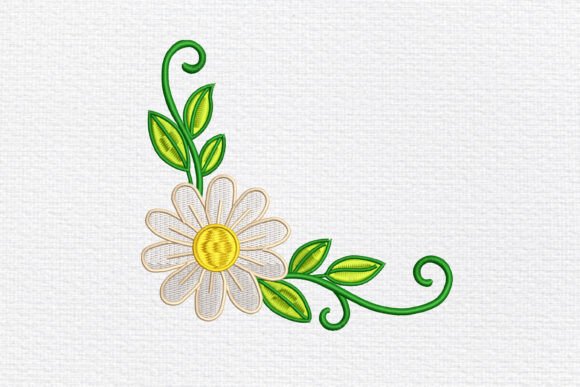
Opening a new machine embroidery design always carries a small thrill, especially when the artwork leans into botanical simplicity. With Daisy Corner Embroidery Design, what hits me first is how gently the composition pulls the eye diagonally. This is not an overwhelming floral explosion. It is restrained, placed neatly into a corner arrangement that feels intentional rather than forced. The daisy motif has been rendered with a clear understanding of negative space, which matters enormously when you start thinking about how a stitched piece will actually sit on a finished product.
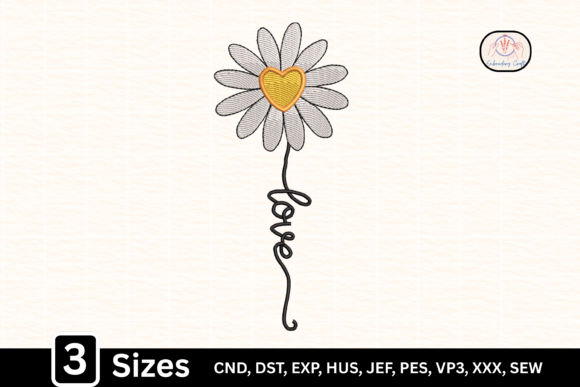
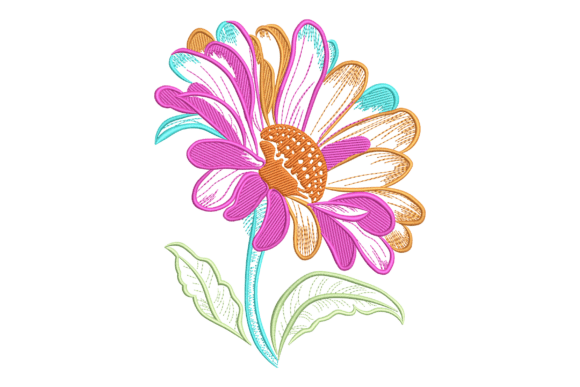
The mood reads as cheerful without tipping into childish territory. That is a harder balance than most people realize. Many floral Single Flowers Plants designs lean either too delicate and washed-out or too cartoonish and loud. This one settles somewhere in the middle, grounded and airy at the same time. As an Embroidery reviewer who has tested hundreds of corner motifs, I appreciate when a designer understands that a corner piece needs to frame something, not dominate it. The daisy petals have enough detail to feel intentional, and the leaf placement creates a gentle flow rather than a static cluster.
Thinking Through a Real Project
I imagined this design stitched onto a natural cotton tote bag, the kind a small shop might sell at a weekend market. The corner placement would sit low on the front panel, leaving plenty of room for a monogram or a short phrase in the center. In my mind, I saw it finished in soft cream thread on an oatmeal-colored canvas, the satin stitch petals catching light differently than the fill stitch leaves. That contrast is exactly what gives a handmade product its perceived value. A customer does not consciously analyze stitch types, but they notice when something looks flat versus when it has dimension.
I also considered how this would behave on a baby sleeper, one of those footed cotton numbers that new parents adore. Corner designs on baby clothes are tricky. You want charm near the collar or across the chest, but you cannot have dense stitching irritating sensitive skin. Here, the design appears open enough that with a quality stabilizer and a soft backing, it would wear comfortably. The daisy shape, being universally recognized and gentle in theme, suits nursery projects without screaming mass production.
Where the Design Performs Best
Corner motifs have a specific superpower. They elevate ordinary blanks into something that feels curated. I see Daisy Corner Embroidery Design thriving on several product types. Pillow covers, especially linen or cotton-linen blends, would gain a boutique look from a single corner placement. Kitchen towels, the kind people actually use rather than just display, benefit from a corner accent that does not interfere with function. The design is charming enough for a personalized gift but neutral enough that a recipient would not feel awkward displaying it.
On custom apparel, the corner placement makes sense for sweatshirt chest accents, near the neckline on a crew neck or offset on a hoodie pocket. T-shirts work well too, though I would keep the placement higher on the chest rather than near the hem where it might compete with waistlines. The versatility mentioned in the product notes rings true. I can imagine this as a repeating element on a quilt block, a subtle detail on an apron bib, or even scaled carefully for a cap side panel, though that last use case requires extra scrutiny of hoop size and curvature.
Fabric and Texture Awareness
Daisy motifs often contain satin stitch borders and fill stitch centers, which means thread density may vary across the design. On tightly woven cotton, this stitches cleanly. On terry cloth or heavily textured linen, the finer details can sink or blur. I would always recommend testing on the exact fabric you plan to sell, not just a smooth quilting cotton scrap. A finished product made on a waffle-weave kitchen towel will look very different from the same design stitched on a flat canvas pouch. The design description suggests towels as a use case, so I would pay close attention to nap direction and stabilizer choice there.
Color Contrast and Thread Selection
Daisies read best when there is clear contrast between petal edges and the center. If you stitch this entirely in white on cream fabric, expect it to disappear into the background. That might be desirable for a tone-on-tone elegant look, but for a craft business product that needs to catch a scrolling eye on an Etsy seller listing, contrast matters. I often test new designs in a grayscale mockup first, stripping away color to see if the shape still holds. A strong silhouette means the design will photograph well for product listings and printable mockup previews.
Hoop and Placement Realities
Corner designs demand precise alignment. Unlike a centered motif that forgives slight shifts, a corner piece that is even a few millimeters off looks immediately wrong. I advise anyone using Daisy Corner Embroidery Design to mark placement lines on the fabric with a washable pen before hooping. Do not rely on visual estimation alone. For small hoop users, confirm that your machine can accommodate the full design dimensions. If the embroidery file includes multiple sizes, test the smallest version first to check how the petal detail holds up. Fine lines that look crisp at a larger scale can become muddled when reduced.
Stitch Quality and Long-Term Durability
A design intended for items that get regular washing, like t-shirts, baby clothes, and kitchen towels, needs to withstand friction and laundering. Stitch density plays a huge role here. Overly dense stitching on thin fabric creates stiffness and can eventually cause tearing around the edges. Underly dense stitching looks sparse and amateur. I have not stitched this specific file yet, but examining the visuals, the petal structure appears balanced. The centers of the daisies likely use a tighter fill, which provides that satisfying textured dot that customers associate with quality machine embroidery design work.
For commercial embroidery applications, where a shop might produce dozens of identical items, consistency across runs matters deeply. I would run five test stitches before committing to a bulk order, checking thread tension, bobbin behavior, and how the design handles minor fabric shifts. No design file is immune to real-world variables, but a well-digitized corner piece should stitch predictably once settings are dialed in.
Giftability and Customer Perception
There is something about a daisy that feels like sunshine without trying too hard. That is a genuine asset for small shop product lines. A personalized gift featuring this design, perhaps a tote bag with a name embroidered in the open space, feels thoughtful rather than generic. Bridal party gifts, Mother's Day presents, housewarming towels, all of these make sense. The design does not limit itself to one season, though it naturally leans toward spring and summer palettes. In autumn tones, deep gold centers with rust-colored leaves, it could shift mood entirely.
From a branding angle, a craft business that consistently uses recognizable floral corner motifs builds a visual signature. Repeat customers start associating that framed, airy look with the shop's identity. Daisy Corner Embroidery Design fits that purpose well because it is distinct without being complicated. It stitches efficiently, photographs cleanly, and pairs nicely with typography or monogram additions.
Licensing and Usage Clarification
Before integrating any design into a product line, confirm the license terms directly with the provider. The description notes that this is a versatile design suitable for multiple project types, but it does not explicitly state whether commercial embroidery use on sold items is permitted, or whether the digital file itself can be resold. Those are separate rights. I never assume. Check before listing finished goods on platforms like Etsy or at in-person markets. Most designers are clear about these terms somewhere in their shop policies, and a quick message can save a lot of trouble later.
Small Details That Make a Difference
One thing I watch for in corner designs is how the edges resolve. A poorly digitized corner sometimes leaves loose thread tails near the inner angle where the design ends. On a tote bag design or sweatshirt embroidery piece, those tails can catch during use or washing. The running stitch underlay and the final tie-off points should be positioned where they can be hidden or trimmed cleanly. If you are new to embroidery, do not skip trimming jump stitches. It is tedious but entirely worth it for the finished look.
The leaf shapes in this design appear to use a directional fill that follows the natural curve of the foliage. That is a subtle digitizing choice that adds a professional finish. When leaves are filled with straight horizontal lines regardless of shape, the result looks mechanical. When the stitch angle follows the organic contour, the piece breathes. Small shops selling handmade product lines benefit from that level of detail because customers feel it, even if they cannot name why one embroidered item looks more premium than another.
Final Practical Thoughts
Daisy Corner Embroidery Design earns its place in a working designer's library. It is not flashy, but it is solidly useful. It suits holiday embroidery gift prep, boutique product development, and everyday projects where a touch of floral charm adds genuine perceived value. Test it first. Experiment with thread color. Mark your placement carefully. Respect the stabilizer needs of each fabric type. And if you are building a cohesive product line, consider how this design plays with companion pieces, monograms, borders, or seasonal variations.
The corner format remains one of the most versatile layouts in digital embroidery file collections, and when executed well, as this design appears to be, it opens up project possibilities across apparel, home goods, accessories, and gift items. For the Etsy seller looking to expand into embroidered goods, or the experienced decorator needing a reliable floral accent, this design deserves a serious look and a test stitch on the fabric that matters most to your specific audience.